
Hybrid Heating Systems
The intelligent heating solution combining heat pump efficiency with gas boiler reliability. Hybrid systems automatically select the most efficient and cost-effective heating source, delivering exceptional comfort, lower running costs, and reduced carbon emissions without compromising on performance.
Serving businesses and homes across England including London, Birmingham, Manchester, Leeds, Liverpool, Bristol, Sheffield, Newcastle, Nottingham, and Southampton.
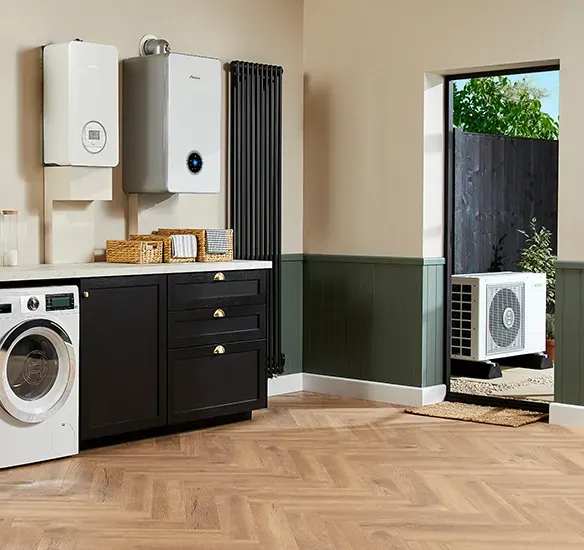
Why Choose Universal Gas for Hybrid Systems?
Expert integration of heat pump and boiler technologies for optimal performance
Intelligent Fuel Switching
Advanced controls automatically select the most efficient heating source based on outdoor temperature, electricity and gas prices, and heating demand. Heat pump operates during mild weather achieving COP 3.0+, while gas boiler handles peak demands during coldest periods.
Perfect for Existing Properties
Hybrid systems suit properties where full heat pump installations are challenging. Smaller heat pumps work alongside existing boilers without requiring full radiator upgrades or extensive insulation improvements. Ideal transition to renewable heating maintaining gas backup security.
Lower Investment Costs
Hybrid systems cost significantly less than full heat pump installations. Smaller heat pumps reduce equipment and installation costs by 30-40% compared to standalone heat pump systems, while delivering similar carbon reductions and running cost savings when operating in heat pump mode.
Reduced Running Costs
Hybrid systems typically reduce heating costs by 30-40% compared to gas-only heating by maximising heat pump use during optimal conditions. Intelligent controls ensure you always use the most cost-effective fuel source, automatically adjusting to changing energy prices and weather conditions.
Hybrid Heating System Options
Professional solutions combining efficiency with reliability
Air Source Hybrid Systems
Small air source heat pump paired with existing or new gas boiler for optimal flexibility.
Integrated Hybrid Units
Purpose-designed hybrid systems combining heat pump and gas boiler in single integrated unit.
Retrofit Hybrid Systems
Add heat pump to existing boiler installations, creating hybrid system while preserving functional equipment.
Commercial Hybrid Systems
Large-scale hybrid installations for businesses achieving carbon reduction targets while maintaining reliability.
How Hybrid Systems Work
Intelligent technology delivering comfort, efficiency, and reliability
Continuous Monitoring
Advanced controls continuously monitor outdoor temperature, heating demand, energy prices, and system performance. Real-time data processing enables intelligent decisions about which heating source delivers optimal efficiency and value.
Automatic Source Selection
System automatically selects the most efficient heating source. During mild weather (above 5-7°C outdoor temperature), heat pump operates achieving COP 3.0-4.0. During very cold periods when heat pump efficiency decreases, gas boiler activates maintaining warmth economically.
Bivalent Operation
At the bivalent point (typically 0-5°C outdoor temperature), system intelligently determines whether heat pump alone, boiler alone, or both operating together delivers best performance. Controls optimise for lowest running cost while maintaining comfortable temperatures throughout property.
Seamless Transitions
Switching between heating sources occurs automatically without occupant intervention or noticeable temperature changes. Hot water cylinder maintains consistent temperature regardless of which system is operating, ensuring uninterrupted comfort and convenience.
Hybrid System Applications
Period & Traditional Properties
Older properties with solid walls, high heat loss, or architectural constraints benefit enormously from hybrid systems. Smaller heat pumps handle baseline heating without requiring full radiator replacement or extensive fabric upgrades. Gas boiler provides backup during coldest weather or when heat pump capacity is insufficient, avoiding compromise on comfort while still achieving 50-70% carbon reduction.
Properties with Existing Boilers
Homes with functional modern boilers (less than 10 years old) can add heat pumps creating hybrid systems without replacing working equipment. Maximize renewable heating percentage while preserving valuable boiler lifespan. As boilers age and require replacement, simply upgrade heat pump capacity creating full heat pump system gradually and economically.
Risk-Averse Homeowners
Hybrid systems suit homeowners concerned about full heat pump reliability or performance. Gas boiler backup provides reassurance and security, eliminating anxiety about cold weather performance or hot water adequacy. Experience heat pump benefits without full commitment, building confidence in renewable heating technology.
Properties on Limited Electrical Supply
Properties with restricted electrical capacity (single-phase 60A supplies or shared supplies in flats) struggle accommodating large heat pumps. Hybrid systems use smaller heat pumps requiring lower electrical demands while gas boiler handles peak loads, avoiding expensive electrical infrastructure upgrades costing thousands of pounds.
Commercial Properties
Businesses achieve corporate sustainability targets while maintaining operational reliability. Hybrid systems reduce carbon emissions 40-60% compared to gas-only heating, supporting net-zero commitments and ESG reporting. Gas backup ensures business continuity during extreme weather or peak demand periods when heating reliability is critical.
Phased Renewable Transition
Properties planning gradual transition to full renewable heating benefit from hybrid systems as intermediate step. Install heat pump now alongside existing boiler, then add insulation improvements, upgrade radiators, or increase heat pump capacity over time. Spreads investment across multiple years while immediately benefiting from reduced running costs and carbon emissions.
What is a Hybrid Heating System?
A hybrid heating system combines two different heating technologies, typically an air source heat pump with a gas boiler, operating together through intelligent controls that automatically select the most efficient and economical heating source based on outdoor temperature, heating demand, and fuel costs. Hybrid systems deliver the efficiency benefits of heat pumps during favorable conditions while maintaining gas boiler reliability as backup during peak demands or very cold weather.
Unlike traditional heating relying on a single technology, hybrid systems optimize performance by leveraging each technology's strengths. Heat pumps operate during mild weather when they achieve exceptional efficiency (COP 3.0-4.0), while gas boilers handle heating during very cold weather when heat pump efficiency decreases and electrical heating costs increase. This intelligent combination delivers lower running costs and carbon emissions than gas-only heating while avoiding the higher investment costs and potential concerns of full heat pump installations.
How Do Hybrid Heating Systems Work?
Hybrid heating systems employ sophisticated controls monitoring multiple variables to determine the optimal heating source at any given moment. The system considers outdoor temperature, indoor heating demand, current energy prices, and each system's efficiency characteristics to select whether the heat pump, gas boiler, or both should operate.
Operating Modes:
Heat Pump Only Mode: During mild weather (typically above 5-7°C outdoor temperature), the heat pump operates alone achieving excellent efficiency (COP 3.0-4.0). The heat pump handles all heating and hot water demands economically, with running costs significantly lower than gas boiler operation.
Hybrid Mode (Bivalent Operation): At moderate outdoor temperatures (typically 0-5°C), controls determine whether heat pump alone or combined heat pump and boiler operation delivers best performance. System may run both simultaneously during high demand periods or switch between them based on efficiency calculations.
Boiler Priority Mode: During very cold weather (typically below 0°C) when heat pump efficiency decreases substantially, the gas boiler takes primary responsibility for heating. The heat pump may switch off completely or operate at reduced capacity depending on economic optimization and outdoor conditions.
Emergency/Backup Mode: If either system requires maintenance or experiences faults, the other continues operating independently maintaining comfort. This redundancy provides exceptional reliability compared to single-source heating systems vulnerable to complete heating failure.
The Bivalent Point:
The bivalent point represents the outdoor temperature where the system switches from heat pump to gas boiler operation. This point is configurable during commissioning based on property characteristics, fuel prices, and owner preferences. Typical bivalent points range from 0-5°C outdoor temperature. Lower bivalent points maximize heat pump usage and carbon savings but may increase electricity costs during very cold weather. Higher bivalent points favor gas boiler use, reducing renewable heating percentage but minimizing running costs.
Benefits of Hybrid Heating Systems
Lower Installation Costs
Hybrid systems cost 30-40% less than full heat pump installations because smaller heat pumps are required. A property needing a 12kW heat pump for full heat pump heating might use only a 5-6kW heat pump in a hybrid configuration, with the gas boiler handling peak demands. This reduces equipment costs, installation complexity, and often eliminates the need for radiator upgrades or extensive insulation improvements required for full heat pump systems.
Reduced Running Costs
Hybrid systems typically reduce heating costs by 30-40% compared to gas-only heating by maximizing heat pump operation during optimal conditions. When heat pumps achieve COP 3.0+, effective heating cost is approximately £0.10/kWh (£0.30 electricity ÷ 3.0 efficiency) compared to £0.10/kWh for gas boilers. During mild weather representing 60-70% of the heating season, heat pumps match or beat gas costs while offering superior efficiency.
Maintained Comfort & Reliability
Gas boiler backup eliminates concerns about heat pump performance during coldest weather or high hot water demands. Properties maintain familiar heating performance with rapid warm-up times and abundant hot water when needed. The psychological comfort of gas backup reduces anxiety for homeowners unfamiliar with heat pump technology, easing the transition to renewable heating.
Carbon Emission Reductions
Hybrid systems reduce carbon emissions by 40-60% compared to gas-only heating by operating heat pumps for majority of the heating season. While not achieving the 80-90% reductions possible with full heat pump systems, hybrids provide substantial environmental benefits at lower cost and with fewer property modifications. For properties unable to install full heat pump systems, hybrids represent significant progress toward net-zero heating.
Works with Existing Radiators
Hybrid systems typically work with existing radiators without requiring upgrades because heat pumps only handle moderate heating loads while gas boilers cover peak demands. This eliminates the radiator replacement costs (£300-600 per radiator) often necessary for full heat pump installations, making hybrids more economically attractive for existing properties with standard radiators.
Future-Proof Investment
As the UK transitions away from fossil fuel heating, hybrid systems provide a stepping stone toward full renewable heating. When your gas boiler eventually requires replacement, you can upgrade the heat pump capacity rather than replacing the boiler, gradually transitioning to full heat pump heating. This phased approach spreads costs while immediately reducing carbon emissions and running costs.
Hybrid Systems vs Full Heat Pumps
Choosing between hybrid systems and full heat pump installations depends on property characteristics, budget, environmental priorities, and personal preferences regarding backup heating.
Cost Comparison:
- Hybrid Systems: £9,000-£14,000 installed including small heat pump, hybrid controls, and integration with existing or new boiler.
- Full Heat Pumps: £11,000-£18,000 installed (after £7,500 grant) for larger heat pump plus often requiring radiator upgrades (£2,000-5,000 additional) and sometimes insulation improvements.
Running Costs:
- Hybrid Systems: 30-40% lower than gas-only heating. Annual heating costs typically £700-1,000 for three-bedroom homes depending on usage patterns and outdoor temperatures.
- Full Heat Pumps: 40-60% lower than gas heating. Annual heating costs typically £550-800 for well-insulated three-bedroom homes, achieving greater savings but requiring higher initial investment.
Carbon Emissions:
- Hybrid Systems: 40-60% reduction compared to gas-only heating. Meaningful environmental impact while maintaining gas backup security.
- Full Heat Pumps: 80-90% reduction compared to gas heating. Maximum carbon savings for properties committed to renewable heating and willing to invest appropriately.
Installation Complexity:
- Hybrid Systems: Simpler installation, often working with existing radiators and minimal property modifications. Typical installation time 2-3 days.
- Full Heat Pumps: More complex, potentially requiring radiator upgrades, cylinder replacement, and electrical supply upgrades. Typical installation time 3-5 days plus any preparatory work.
Hybrid System Costs & Economics
Installation Costs:
- Air Source Hybrid (Separate Components): £9,000-£14,000 installed including 5-8kW heat pump, hybrid controls, integration with existing or new boiler, hot water cylinder if required, and commissioning
- Integrated Hybrid Units: £10,000-£15,000 installed for purpose-designed hybrid systems combining heat pump and boiler in single unit with factory-integrated controls
- Retrofit to Existing Boiler: £7,000-£11,000 for heat pump and hybrid controls when adding to functional existing boiler
- Commercial Hybrid Systems: £20,000-£100,000+ depending on capacity, complexity, and site requirements
Annual Running Costs:
Hybrid system running costs depend on system sizing, climate, property insulation, and the bivalent point setting. For a typical three-bedroom home with moderate insulation requiring 15,000 kWh annual heating:
- Gas Only: £1,200-1,400 annually (at £0.10/kWh gas)
- Hybrid System: £750-950 annually (30-40% savings)
- Full Heat Pump: £600-800 annually (40-50% savings)
Payback Period:
Hybrid systems typically achieve 10-15 year payback periods through running cost savings compared to gas-only heating. While payback is longer than some renewable technologies, the lower upfront investment and maintained reliability make hybrids attractive for many homeowners. Commercial installations achieve faster payback (6-10 years) due to higher utilisation and Enhanced Capital Allowances tax benefits.
Are Hybrid Systems Right for You?
Hybrid heating systems suit specific property types and owner circumstances where they deliver optimal value:
Ideal for Hybrid Systems:
- Properties with functional modern boilers (less than 10 years old) worth preserving
- Homes with limited electrical capacity avoiding expensive supply upgrades
- Period properties with high heat loss or architectural constraints preventing full heat pump installations
- Properties with existing standard radiators where radiator replacement costs would be prohibitive
- Homeowners wanting renewable heating benefits with gas backup security
- Properties planning gradual transition to full renewable heating over time
- Businesses achieving sustainability targets while maintaining operational reliability
Better Suited to Full Heat Pumps:
- Well-insulated modern properties or those undergoing extensive renovation
- Properties with adequate electrical supply and no gas connection costs
- Homeowners prioritizing maximum carbon reduction and long-term running cost savings
- New build properties designed for renewable heating from the start
- Properties with existing underfloor heating or oversized radiators
- Homeowners comfortable with heat pump technology and performance characteristics
Frequently Asked Questions
How much do hybrid heating systems cost?
Hybrid heating systems typically cost £9,000-£14,000 installed for residential properties, combining a 5-8kW air source heat pump with existing or new gas boiler. This represents 30-40% savings compared to full heat pump installations (£18,000-£25,000 after grants including necessary upgrades). Retrofit installations adding heat pumps to existing functional boilers cost £7,000-£11,000. Commercial systems range £20,000-£100,000+ depending on capacity and complexity.
How much can I save with a hybrid system?
Hybrid systems typically reduce heating costs by 30-40% compared to gas-only heating, saving £300-500 annually for typical three-bedroom homes. Exact savings depend on property insulation, heating patterns, outdoor temperatures, and relative fuel prices. Properties with high heating demands or poor insulation achieve greater absolute savings. Carbon emissions reduce by 40-60% compared to gas-only heating, contributing meaningfully to environmental goals.
Do hybrid systems work with existing radiators?
Yes, hybrid systems typically work with existing radiators without requiring upgrades. Because heat pumps only handle moderate heating loads while gas boilers cover peak demands, radiators don't need oversizing for lower flow temperatures. This eliminates the £2,000-5,000 radiator replacement costs often necessary for full heat pump installations. Our surveys confirm radiator suitability, though occasional upgrades in particularly cold rooms may benefit comfort.
How does the system decide which to use?
Advanced hybrid controls continuously monitor outdoor temperature, heating demand, and energy prices, automatically selecting the most efficient heating source. During mild weather (above 5-7°C), heat pumps operate achieving excellent efficiency. During very cold weather (below 0-5°C) when heat pump efficiency decreases, gas boilers take over maintaining comfort economically. The switchover point (bivalent point) is configurable during commissioning based on your preferences and local conditions.
Are hybrid systems eligible for grants?
Hybrid systems currently do not qualify for the Boiler Upgrade Scheme £7,500 grant available for full heat pump installations. However, the lower installation costs of hybrid systems (£9,000-£14,000 vs £18,000-£25,000 for full heat pumps after grant) often make them similarly affordable despite grant ineligibility. Commercial installations may qualify for Enhanced Capital Allowances providing significant tax benefits. Future grant schemes may include hybrid systems as government policy evolves.
Can I add a heat pump to my existing boiler?
Yes, heat pumps can be retrofitted to existing boiler installations creating hybrid systems while preserving functional equipment. This works particularly well for modern condensing boilers less than 10 years old with remaining lifespan. Retrofit installations cost £7,000-£11,000 for heat pump, hybrid controls, and integration. When your boiler eventually requires replacement, you can then upgrade the heat pump capacity transitioning to full renewable heating gradually and economically.
How long do hybrid systems last?
Heat pump components typically last 15-20 years while gas boilers last 12-15 years. Because hybrid systems use both technologies less intensively than single-source heating, component lifespan often exceeds these averages. The heat pump operates primarily during milder weather under less demanding conditions, while the gas boiler handles occasional peak loads rather than continuous operation. This shared workload extends equipment longevity for both systems.
What maintenance do hybrid systems require?
Hybrid systems require maintenance for both components. Gas boilers need annual servicing (£85-95) to maintain safety and warranty validity. Heat pumps need less frequent professional maintenance (every 2-3 years, £100-150), though homeowners should clean outdoor unit filters and check system pressures periodically. Total maintenance costs are higher than single-system heating but redundancy means scheduled maintenance for one system doesn't leave you without heating.
Are hybrid systems noisy?
Hybrid systems are no noisier than standard heating installations. The heat pump outdoor unit operates similarly to standalone air source heat pumps (40-50dB at 1 metre), though often runs less frequently because the gas boiler handles peak loads. Gas boilers inside properties operate as quietly as any condensing boiler. During boiler-only operation, outdoor noise is eliminated entirely. Strategic placement of outdoor units minimizes any noise impact on occupants and neighbors.
Can I upgrade from hybrid to full heat pump later?
Yes, hybrid systems provide excellent stepping stones toward full heat pump heating. When your gas boiler reaches end of life requiring replacement (typically after 12-15 years), you can upgrade the heat pump capacity rather than replacing the boiler. This phased approach spreads costs while immediately benefiting from reduced running costs and carbon emissions. Many homeowners install additional insulation or upgrade radiators during the interim period, preparing properties for full heat pump operation when convenient.
Ready to Switch to a Hybrid System?
Or call our team on 01582 363934 • Available Monday-Friday 8am-5pm, Saturday 10am-5pm