
Battery Energy Storage Systems
Store surplus solar energy, shift electricity consumption away from expensive peak rates, and enjoy backup power during outages. Achieve energy independence while dramatically reducing electricity costs.
Serving businesses and homes across England including London, Birmingham, Manchester, Leeds, Liverpool, Bristol, Sheffield, Newcastle, Nottingham, and Southampton.
Why Choose Universal Gas for Battery Storage?
Expert installation and system design backed by manufacturer warranties and ongoing support
Maximise Financial Returns
Store cheap off-peak electricity at 7p/kWh and use during expensive peak hours at 30p+/kWh. Combined with solar, increase self-consumption from 30% to 80% for maximum savings.
Commercial Expertise
Peak shaving solutions for businesses reduce demand charges by 20-40%. We design systems for offices, retail, manufacturing, and agricultural properties nationwide.
Premium Battery Technology
We install various solutions. LFP batteries with 6000+ cycle life and exceptional safety characteristics.
Smart Tariff Integration
Automatic optimisation for Octopus Go, Agile, Economy 7, and Intelligent Octopus. Systems learn your usage patterns and maximise savings without manual intervention.
Battery Storage Applications
Time-of-Use Optimisation
Charge your battery with cheap off-peak electricity (7p/kWh on Octopus Go, Economy 7) and use it during expensive peak hours (30p+/kWh). The system automatically manages charging and discharging based on your tariff.
Solar Self-Consumption
Store surplus solar generation during the day and use it in the evening when panels aren't producing. Increase self-consumption from 30% to 80%, dramatically improving your solar investment returns.
Backup Power Security
Automatically switch to battery power during grid outages. Protect essential circuits like heating, refrigeration, freezers, internet connectivity, and security systems for 8-24 hours.
Commercial Peak Shaving
Reduce expensive demand charges by discharging batteries during peak consumption periods. Particularly valuable for manufacturing, cold storage, hospitality, and businesses with high instantaneous power draws.
EV Charging Integration
Store cheap overnight electricity and use it to charge your electric vehicle during the day. Or store surplus solar for completely free EV charging. Typical EV uses 3-4kWh per 10 miles driven.
Agricultural Properties
Large battery systems for farms support irrigation pumps, grain dryers, dairy operations, and workshop equipment. Reduce reliance on expensive three-phase grid connections and avoid peak demand charges.
What is Battery Energy Storage?
Battery energy storage systems (BESS) are rechargeable batteries that store electrical energy for later use. Home and commercial battery storage systems capture electricity when it's cheap or abundant (such as off-peak hours or during sunny periods when solar panels generate surplus), then release that stored energy when electricity is expensive or solar generation is unavailable.
Modern lithium battery storage systems integrate with your property's electrical system, automatically managing when to store electricity and when to use it, optimising your energy costs without requiring manual intervention. These intelligent systems can reduce electricity bills by 50-70% when combined with solar panels, or 30-50% even without solar by taking advantage of time-of-use electricity tariffs.
How Does Battery Storage Work?
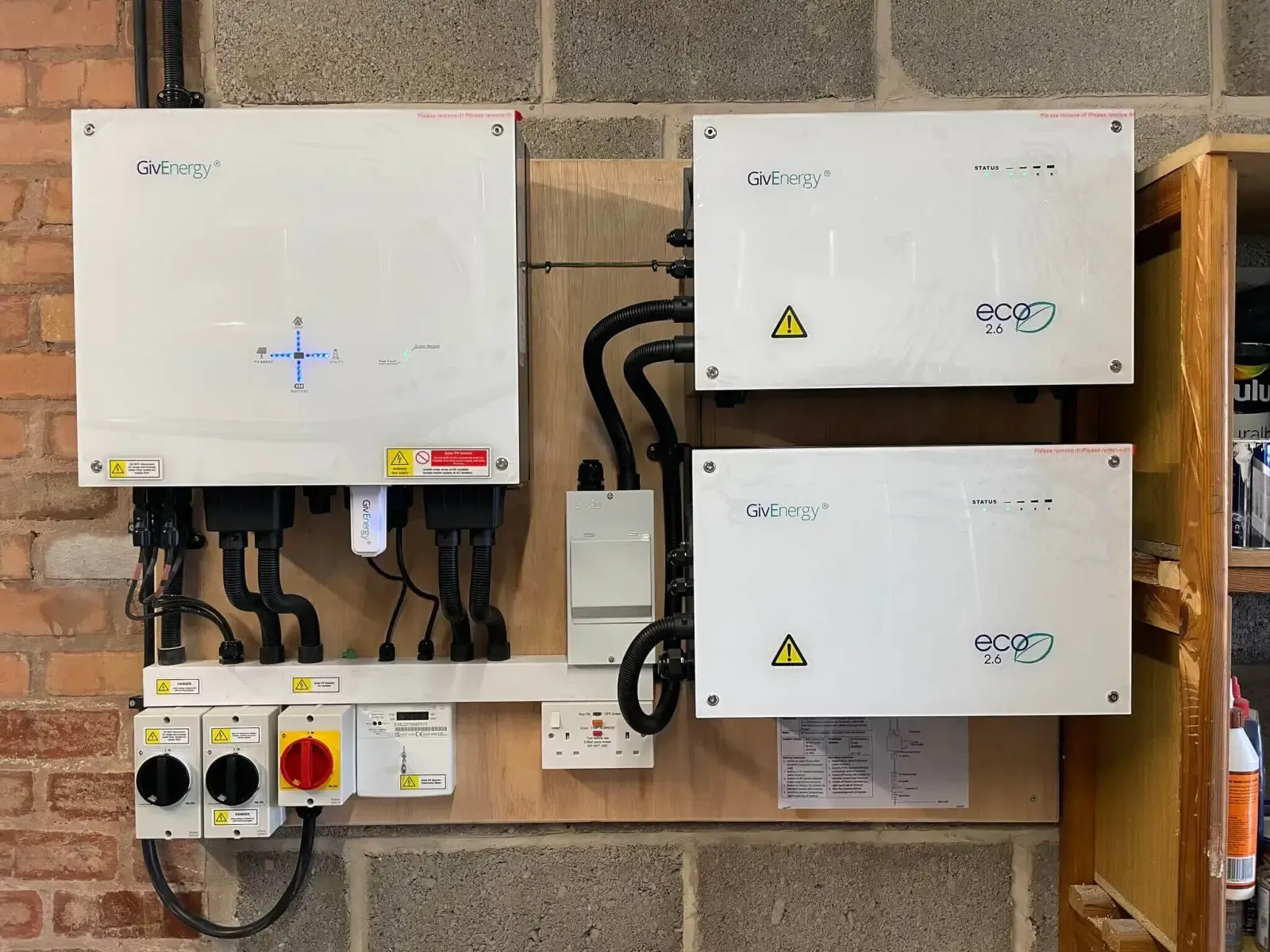
Battery storage systems consist of several key components working together:
Battery Cells contain lithium compounds that store electrical energy through chemical reactions. Modern systems use either Lithium Iron Phosphate (LFP) or Lithium Nickel Manganese Cobalt (NMC) chemistry.
Inverter converts DC electricity stored in batteries into AC electricity used by your home or business. Advanced hybrid inverters manage both solar panels and battery storage simultaneously.
Battery Management System (BMS) monitors individual battery cells, ensuring they charge and discharge safely within optimal parameters, balancing cells for longevity.
Energy Management System (EMS) is the intelligent brain of your installation, automatically deciding when to store electricity, when to use it, and when to sell surplus back to the grid based on electricity prices and consumption patterns.
Benefits of Battery Storage
Reduce Electricity Bills: Store cheap off-peak electricity and use it during expensive peak hours. Typical savings of £600-800 annually for homes with time-of-use tariffs.
Maximise Solar Investment: Increase solar self-consumption from 30% to 80% by storing surplus daytime generation for evening use. Stop exporting valuable electricity for pennies.
Energy Independence : Take control of your energy supply and costs. Reduce reliance on the grid and protect against rising electricity prices.
Backup Power: Systems with backup capability automatically provide power during grid outages, keeping essential circuits running for 8-24 hours.
Environmental Impact: Store renewable energy for use when needed, reducing fossil fuel consumption. When paired with solar, achieve near-zero carbon electricity consumption .
For Businesses:
Lithium Iron Phosphate (LFP) batteries offer exceptional safety characteristics and long cycle life. The stable chemistry means minimal degradation even after 6000+ charge cycles (15+ years of daily use). LFP batteries are increasingly popular for residential and commercial storage due to their longevity and thermal stability.
Lithium Nickel Manganese Cobalt (NMC) batteries provide higher energy density, storing more capacity in smaller physical footprint. They typically last 4000-5000 cycles (10-12 years) and are suitable for space-constrained installations .
Smart Tariff Integration
Modern battery systems integrate seamlessly with time-of-use electricity tariffs. Popular tariffs include Octopus Go (7p/kWh overnight), Octopus Agile (prices change every 30 minutes based on wholesale markets), Economy 7/10 (traditional off-peak), and Intelligent Octopus (smart EV tariff). Batteries automatically charge when prices are lowest and discharge during expensive periods, maximising your savings without manual intervention.
Frequently Asked Questions
Can I add battery storage to my existing solar panels?
Yes, battery storage can be retrofitted to virtually any existing solar installation. We install AC-coupled battery systems that connect to your existing setup without modification. If you have an older inverter, we can install a hybrid inverter that manages both solar and battery together for enhanced efficiency.
Do I need solar panels to benefit from battery storage?
No, battery storage delivers substantial savings even without solar panels through time-of-use tariff optimization. Charge your battery with cheap off-peak electricity (7-10p/kWh) and use it during expensive peak hours (30p+/kWh). Typical savings of £400-600 annually without solar.
Calculate Your Battery Storage Savings
See how much you could save with a battery storage system tailored to your energy needs. Get a free assessment.
Or call our team on 01582 363934 • Available Monday-Friday 8am-6pm, Saturday 9am-4pm