
When it comes to running a successful business in the UK, reliable heating isn't just about comfort-it's about productivity, compliance, and protecting your bottom line. Whether you operate a small office, a sprawling warehouse, or a bustling retail space, your commercial heating system works harder than you might realize. A well-maintained heating infrastructure keeps employees productive during cold months, ensures customers feel welcomed in your premises, and prevents costly emergency breakdowns that can bring operations to a grinding halt.
The commercial heating landscape has evolved dramatically in recent years, driven by stricter energy efficiency regulations, rising fuel costs, and the push toward net-zero emissions. Business owners now face a complex web of decisions: Which heating system best suits their specific operational needs? How can they balance upfront investment with long-term running costs? What maintenance schedule will maximize system lifespan while minimizing disruption? These aren't just technical questions-they directly impact your business continuity, operational expenses, and even your corporate responsibility credentials.
In this comprehensive guide, we'll walk you through everything you need to know about commercial heating solutions for UK businesses. From understanding the unique heating requirements of different commercial spaces to navigating the maze of regulations and compliance standards, we'll equip you with the knowledge to make informed decisions about your heating infrastructure. Whether you're considering a new installation, planning a system upgrade, or simply want to optimize your existing setup, this guide will help you create a heating strategy that keeps your business running smoothly all year round.
1. Understanding Different Commercial Heating Needs
Not all commercial spaces are created equal when it comes to heating requirements. The heating solution that works perfectly for a professional office might be completely inadequate for an industrial warehouse, while a retail environment presents its own unique challenges. Understanding these differences is crucial for selecting the right system and avoiding costly mistakes that could impact both your operational efficiency and your energy bills.
Office environments typically require consistent, comfortable temperatures throughout the working day, with specific attention to individual zones or meeting rooms that may need independent temperature control. Modern offices often feature open-plan layouts that demand even heat distribution, while executive spaces or client-facing areas might need more precise climate control. The challenge in office heating isn't just about raw power-it's about creating a comfortable working environment that maintains productivity without causing hot spots or cold zones that lead to employee complaints. You'll also need to consider ventilation requirements, as offices with high occupancy can quickly become stuffy if heating systems aren't properly balanced with fresh air circulation.
Warehouses and industrial units present an entirely different heating challenge. These large, high-ceiling spaces require powerful heating systems that can combat heat loss through extensive roof areas and frequent door openings. Traditional radiator systems simply won't cut it in these environments-you're looking at solutions like radiant heaters, warm air heating systems, or destratification fans that prevent warm air from collecting uselessly at ceiling height. The key consideration here isn't just heating capacity but also zoning: many warehouses only need to maintain full heating in operational areas, with storage zones kept at lower temperatures to save energy. Loading bay areas require special attention, often needing air curtains or additional localized heating to combat the constant blast of cold air from outside.
Retail spaces occupy a middle ground, requiring both customer comfort and energy efficiency in environments characterized by fluctuating footfall, frequent door openings, and extensive glass frontage. Retail heating systems must respond quickly to changing conditions-a quiet Tuesday morning requires different heating output than a packed Saturday afternoon. Shop fronts with large windows create significant heat loss, while back-of-house storage and staff areas need separate heating zones. Many retailers now opt for underfloor heating in customer areas, providing even heat distribution without taking up valuable wall space with radiators, while maintaining more basic systems in storage areas.
Hospitality venues like restaurants, cafes, and hotels face the most demanding heating requirements of all. These businesses must maintain precise comfort levels regardless of external conditions or customer numbers, often operating extended hours including evenings when energy costs peak. Kitchen areas require special consideration, as they generate significant heat from cooking equipment, while dining areas need comfortable but not oppressive temperatures. Hotels must provide individual room control while maintaining efficient central systems, and they face unique challenges with constantly changing occupancy patterns that make heating management particularly complex.
2. Compliance and Regulations: What Every Business Must Know
Navigating the regulatory landscape for commercial heating in the UK can feel like threading through a minefield, but compliance isn't optional-it's a legal requirement that protects your employees, customers, and business from serious consequences. The regulatory framework exists for good reason: poorly maintained or non-compliant heating systems pose real risks of carbon monoxide poisoning, fire hazards, and catastrophic system failures. Understanding these regulations isn't just about avoiding fines; it's about ensuring your heating infrastructure operates safely and efficiently.
At the foundation of commercial heating compliance sits the requirement for annual gas safety inspections by Gas Safe registered engineers. Unlike domestic properties where annual safety checks are only mandatory for rental properties, commercial premises must have all gas appliances inspected every 12 months without exception. This legal requirement applies whether you operate a small office or a large industrial complex. The inspection must be thorough, covering all gas appliances, pipework, flues, and ventilation, with any issues documented and rectified promptly. Failure to maintain valid gas safety certificates can result in prosecution, substantial fines, and even imprisonment for business owners or directors deemed responsible.
Building Regulations Part L-the section governing energy efficiency-has become increasingly stringent in recent years, particularly following updates aimed at achieving the UK's net-zero targets. If you're installing a new heating system or making significant alterations to existing systems, you'll need to comply with minimum efficiency standards that often require condensing boilers, time controls, zone controls, and proper insulation. These regulations apply even to replacement installations: you can't simply swap an old inefficient boiler for another old model. The system must meet current standards, which typically means achieving seasonal efficiency ratings above 86% and including proper controls for temperature management and timing.
The Health and Safety at Work Act places additional duties on employers to maintain safe working environments, which explicitly includes keeping workplace temperatures at reasonable levels. While there's no legal minimum temperature for most workplaces, the Health and Safety Executive recommends maintaining at least 16°C in offices and 13°C in spaces involving physical work. More importantly, your heating system must be maintained in a condition that prevents harm to employees or visitors. This means regular maintenance, prompt repairs of any faults, and keeping detailed records of all servicing work. If an employee suffers harm due to a poorly maintained heating system-whether from carbon monoxide exposure, burns from faulty equipment, or even just working in unreasonably cold conditions-your business could face legal action and significant liability.
Non-Domestic Energy Performance Certificates are mandatory when selling or renting commercial properties, and increasingly, businesses face pressure to improve their energy ratings as part of broader environmental commitments. Properties with very poor energy ratings (F or G) are subject to Minimum Energy Efficiency Standards (MEES), which prohibit letting these properties unless exemptions apply. Even if you're not planning to move, poor energy performance increasingly affects business reputation, with many corporate clients now requiring suppliers to demonstrate environmental credentials including energy-efficient premises.
3. The Critical Importance of Planned Maintenance Contracts
One of the most costly mistakes commercial property managers make is treating heating systems as "fit and forget" infrastructure. A planned maintenance contract isn't an optional extra or unnecessary expense-it's an investment that pays for itself many times over through improved reliability, extended equipment life, and dramatically reduced risk of emergency breakdowns. The difference between reactive and proactive heating maintenance is the difference between minor scheduled service costs and catastrophic emergency repairs during the coldest weeks of winter.
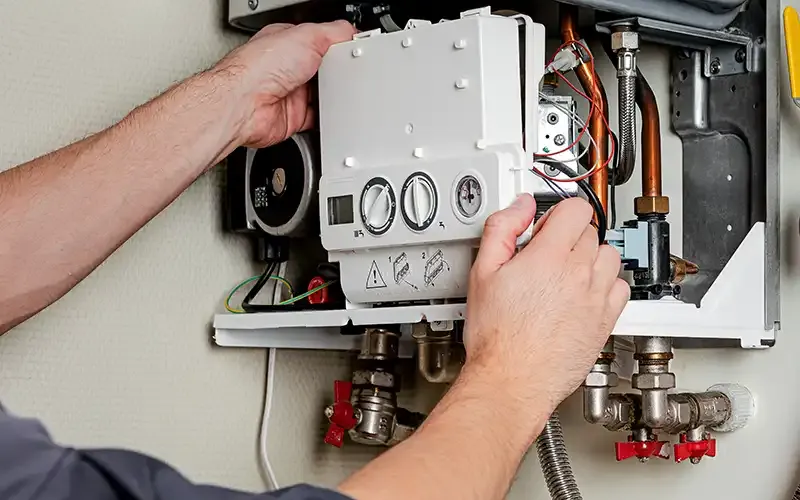
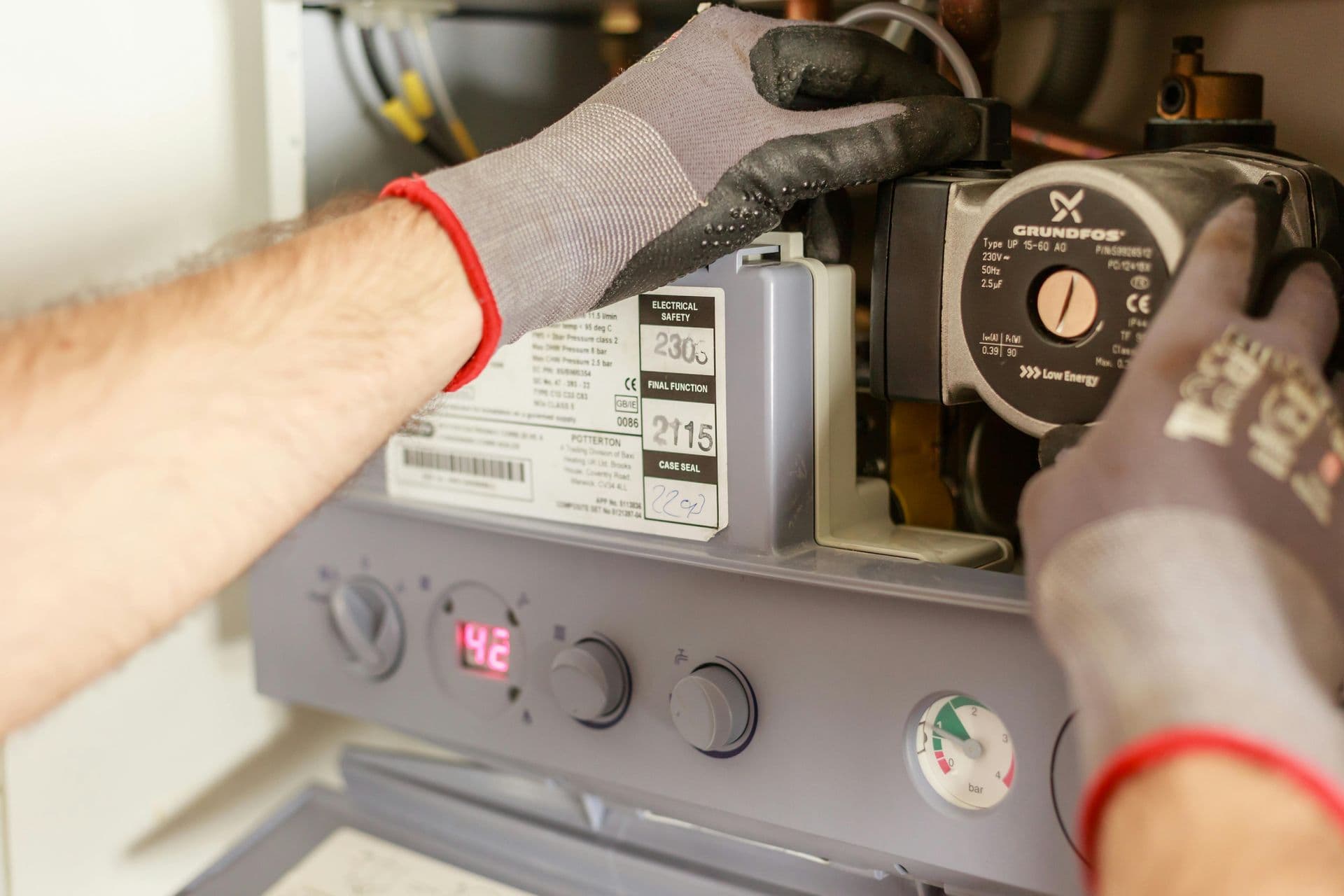
A comprehensive planned maintenance contract provides scheduled annual or bi-annual servicing by qualified engineers who know your system intimately. These visits go far beyond the basic gas safety check, including detailed inspection of all components, cleaning of heat exchangers, testing of safety devices, checking of control systems, and most importantly, identifying potential issues before they become failures. Engineers can spot worn components during routine maintenance-a pump bearing that's starting to grind, a diverter valve showing signs of sticking, or a pressure vessel that's lost its charge-and schedule replacement at a convenient time rather than waiting for it to fail on the coldest Monday morning of the year when your entire workforce is trying to work in freezing conditions.
The financial case for planned maintenance is compelling. Emergency call-outs typically cost two to three times more than scheduled maintenance visits, and that's before considering the cost of business disruption. If your heating system fails on a Friday evening and requires parts that aren't in stock, you could be facing a weekend without heating, with employees unable to work effectively come Monday morning. The lost productivity alone often exceeds the annual cost of a maintenance contract. Moreover, well-maintained systems run more efficiently, reducing energy consumption by 10-20% compared to neglected systems where efficiency gradually degrades through dirt accumulation, control drift, and component wear.
Beyond the immediate financial benefits, planned maintenance contracts provide something equally valuable: peace of mind and guaranteed response times. Most contracts include priority response for breakdowns, meaning if something does go wrong, you jump to the front of the queue rather than waiting days for an emergency slot. This priority access can be the difference between a few hours of discomfort and several days of business disruption. Contracts also typically include guaranteed parts pricing and labor rates, protecting you from the premium charges often applied to emergency work when engineers know you have no alternative but to pay whatever they ask.
When selecting a maintenance contract, look beyond just the price to understand what's included. Basic contracts might only cover annual gas safety checks, while comprehensive packages include multiple visits, all parts, unlimited call-outs, and even replacement systems if major components fail beyond economical repair. Read the small print carefully: some contracts exclude certain types of faults, have limits on parts costs, or require you to use specific suppliers for consumables. The best contracts are those that give you a single fixed annual cost covering all maintenance and most repairs, allowing you to budget accurately and avoid nasty surprises.
4. Energy Efficiency: Reducing Costs While Staying Warm
Energy efficiency in commercial heating isn't just about doing your bit for the environment-though that's increasingly important as businesses face pressure to demonstrate environmental credentials. The real driver for most business owners is financial: heating typically accounts for 40-60% of a commercial building's total energy consumption, and with energy prices remaining stubbornly high despite recent falls from their peak, inefficient heating systems are literally burning money. The good news is that significant efficiency improvements are often achievable with relatively modest investment, delivering payback periods measured in months rather than years.
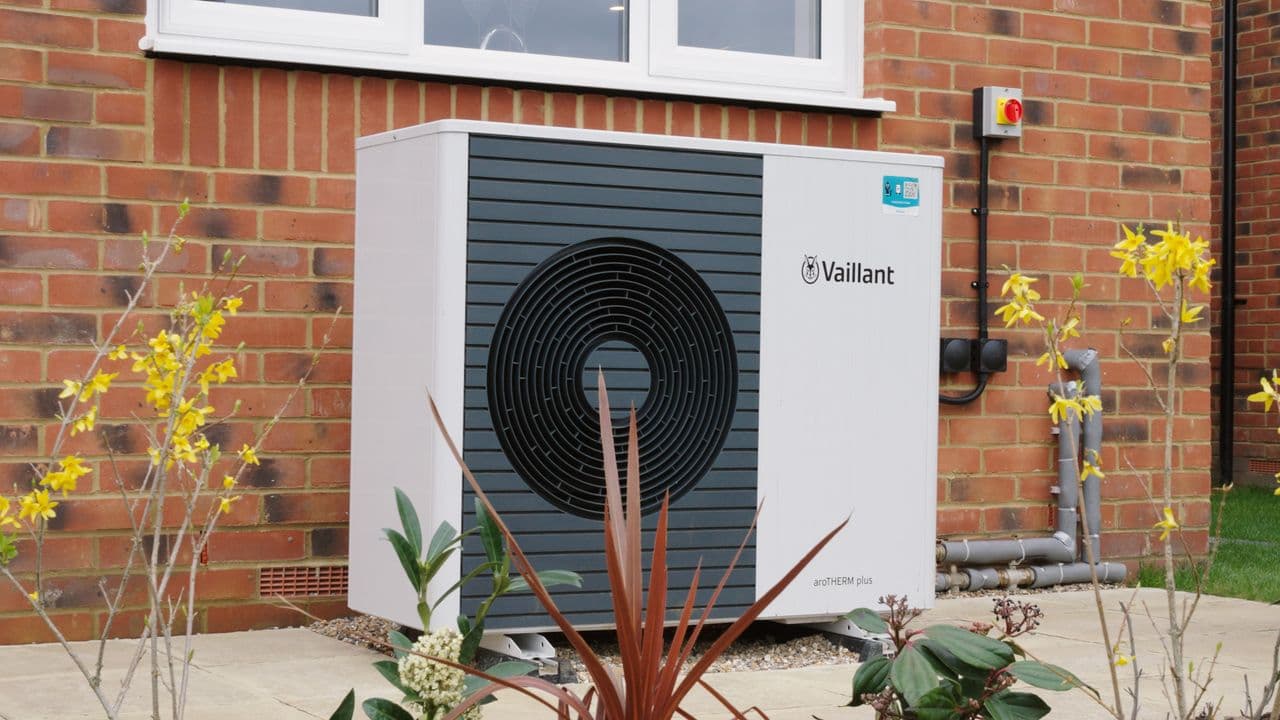
Modern condensing boilers represent the foundation of efficient commercial heating, extracting heat from flue gases that older boilers simply vent to atmosphere, achieving seasonal efficiency ratings of 90% or higher compared to 70-75% for traditional boilers. If you're still operating non-condensing boilers installed before 2005, you're likely wasting more than £2,000 per year for every £10,000 of heating costs-money that could be invested in your business rather than disappearing up the flue. However, simply installing an efficient boiler isn't enough; the system must be sized correctly for your building's actual needs, not over-specified "just to be safe" which leads to inefficient cycling and wasted energy.
Intelligent control systems deliver perhaps the biggest efficiency gains for the smallest investment. Programmable thermostats with optimum start functions learn how long your building takes to warm up and automatically adjust heating start times, ensuring comfortable temperatures when staff arrive without wasting energy heating empty buildings for hours beforehand. Zoning controls allow different areas to be heated independently-there's no sense heating storage areas to the same temperature as occupied offices, or maintaining full heating in meeting rooms that are only used occasionally. Weather compensation controls adjust heating output based on outside temperature, automatically reducing system temperature on milder days when full heating output would overheat the building and waste energy.
Insulation and building fabric improvements often provide the best return on investment of all efficiency measures, yet they're frequently overlooked in favor of more visible equipment upgrades. Heat can only escape through building surfaces-walls, windows, roof, floor-so reducing this heat loss means less energy required to maintain temperature. Even simple measures like replacing worn door seals, installing automatic closers on external doors, and ensuring loading bay doors aren't left open unnecessarily can deliver surprising savings. More substantial improvements like roof insulation, double glazing upgrades, or wall insulation may require larger investment but can reduce heating requirements by 30-50%, making them cost-effective over their lifetime while also improving comfort and reducing temperature fluctuations.
Regular maintenance itself is an efficiency measure, as poorly maintained systems gradually lose efficiency. A boiler with dirty heat exchangers might be 15% less efficient than when clean. Radiators filled with sludge or air don't heat rooms effectively, causing the system to work harder to achieve target temperatures. Thermostatic radiator valves that have seized open waste energy in areas that don't need heating, while those seized closed create cold spots and complaints. Annual professional maintenance keeps systems operating at peak efficiency, but basic ongoing checks-bleeding radiators, checking pressure, listening for unusual noises-allow you to spot issues before they significantly impact efficiency.
5. Why 24/7 Emergency Call-Out Coverage Isn't Optional
No business owner wants to think about their heating system failing at the worst possible moment, but ignoring this possibility is like driving without insurance-everything's fine until it isn't, and when disaster strikes, the consequences can be devastating. Commercial heating systems, like all mechanical equipment, will eventually fail, and they have a frustrating tendency to choose the most inconvenient times to do so. A 24/7 emergency call-out service isn't a luxury or nice-to-have-it's an essential safety net that protects your business from operational disasters, legal liability, and financial losses that can spiral into the tens of thousands of pounds.
Consider the real-world scenario: it's 6am on Monday morning in January, and your heating system has failed overnight. Your staff will start arriving in two hours expecting a warm workplace, but your building is currently 8°C and dropping. Without emergency cover, you're looking at a regular business hours call-out at best-meaning a 9am or 10am arrival, followed by diagnosis time, potentially waiting for parts if anything needs replacing. You're facing the choice of sending staff home (losing a day's productivity), having them work in unsuitable conditions (risking health and safety issues and almost certainly violating your duty of care as an employer), or finding temporary accommodation (expensive and disruptive). The cost of a single incident like this often exceeds several years of emergency call-out cover premiums.
Emergency heating failures don't just cause discomfort-they can trigger serious legal and financial consequences. As an employer, you have a duty to provide a safe working environment, which includes maintaining reasonable temperatures. If staff refuse to work in freezing conditions, you generally cannot withhold pay, and forcing them to work in unreasonable temperatures could constitute a health and safety breach. If your business serves customers-whether retail, hospitality, or healthcare-heating failure can force closure, with every hour closed representing lost revenue that you'll never recover. For businesses with temperature-sensitive stock or processes, heating failure can cause product damage, contamination, or quality issues that result in waste and customer dissatisfaction.
The best emergency call-out services provide guaranteed response times-typically within 2-4 hours for genuine emergencies, with some providers offering even faster response for critical situations. This guarantee matters: when you're facing a heating emergency, you need certainty about when help will arrive, not vague promises of "as soon as we can get someone to you." Look for providers who maintain adequate engineer coverage to deliver on their response time promises even during peak demand periods like cold snaps when every business seems to have heating problems simultaneously. Providers who offer specific response time guarantees and back them with service level agreements are demonstrating genuine commitment to emergency service rather than just paying lip service to availability.
Prevention is always better than cure, which is why the best emergency call-out arrangements are bundled with comprehensive maintenance contracts. Regular servicing dramatically reduces the likelihood of unexpected failures, while engineers who maintain your system year-round can respond more effectively to emergencies because they already understand your equipment. They know the system history, have records of previous work, and can often diagnose problems remotely over the phone, arranging to bring necessary parts rather than requiring multiple visits. This familiarity can cut emergency response time by hours and significantly increase the likelihood of fixing problems on the first visit rather than requiring return trips while parts are sourced.
6. Real-World Success: Commercial Sectors We Serve
Understanding commercial heating requirements in theory is valuable, but nothing beats real-world experience across diverse sectors. At Universal Gas, we've installed, maintained, and repaired heating systems for businesses spanning virtually every commercial sector across Hertfordshire and Bedfordshire, from small startups to established enterprises. Each sector brings unique challenges and requirements, and our experience across these diverse environments gives us insights that purely residential engineers simply don't possess.
Professional service offices-solicitors, accountants, architects, and consultancies-depend on us to maintain the comfortable, professional environment their clients expect. These businesses can't afford heating disruptions during client meetings or quarter-end crunches, and they need systems that operate quietly without disrupting concentration-intensive work. We've helped numerous professional firms upgrade from aging, inefficient systems to modern installations with zone control, allowing them to independently heat meeting rooms only when occupied and maintain different temperatures in different departments based on their specific needs and preferences. One legal firm we work with reduced their heating costs by 35% after we installed a new system with intelligent controls and proper zoning, while simultaneously improving comfort and eliminating cold spots that had plagued their previous setup.
Manufacturing and warehouse clients present different challenges entirely. We've worked with businesses ranging from small units storing ambient goods to large facilities with specific temperature requirements for sensitive materials. One automotive parts distributor struggled with massive heating bills and uneven temperatures in their 20,000 square foot warehouse-cold spots near loading doors made working conditions unpleasant, while excessive heat near the office area wasted energy. We designed a solution using radiant heaters for the main warehouse floor, air curtains for loading doors, and a separate system for the office area, cutting their energy costs by 40% while improving working conditions throughout the facility. The investment paid for itself in under two years purely through energy savings, with the added benefit of reduced staff complaints about cold working conditions.
Retail businesses across Luton, St Albans, and Watford rely on our fast response times and reliable installations. Shops can't afford extended closures for heating work, so we schedule installations during quiet periods and work efficiently to minimize disruption. We've helped retailers ranging from small boutiques to larger stores optimize their heating, balancing customer comfort with cost control. One fashion retailer we work with had struggled with their previous heating engineer's slow response to breakdowns-twice they'd been forced to close for full days when heating failed during cold spells. Since moving to our planned maintenance contract with guaranteed emergency response, they haven't lost a single day of trading to heating issues, and they're saving money through improved efficiency and eliminated emergency repair premiums.
Healthcare and care facilities present unique challenges requiring absolute reliability and specific environmental standards. We've worked with medical centers, dental practices, and care facilities where heating isn't just about comfort-it's a regulatory requirement affecting patient care and facility licensing. These clients need guaranteed response times and backup solutions, which we provide through comprehensive maintenance contracts with priority emergency response. One care home we've served for over eight years has never experienced heating downtime lasting more than four hours, even when major component failures required emergency parts sourcing, because our maintenance program caught developing issues before they became failures and our engineers maintain stock of critical spare parts for the systems we regularly service.
Taking Control of Your Commercial Heating
Your commercial heating system represents one of your largest ongoing operational expenses and one of your most critical pieces of infrastructure. Getting it wrong-through poor equipment selection, inadequate maintenance, or reactive rather than planned approach-costs money, causes disruption, and creates unnecessary stress. Getting it right-through appropriate system design, regular professional maintenance, and reliable emergency backup-delivers comfort, efficiency, and peace of mind that lets you focus on running your business rather than worrying about your heating.
The investment in proper commercial heating management pays for itself multiple times over through reduced energy costs, eliminated emergency repair premiums, extended equipment life, and avoided business disruption. Whether you're due for a system replacement, concerned about your current heating's reliability, or simply want to reduce those stubbornly high energy bills, professional guidance makes the difference between a solution that works adequately and one that genuinely optimizes your heating infrastructure for your specific needs.
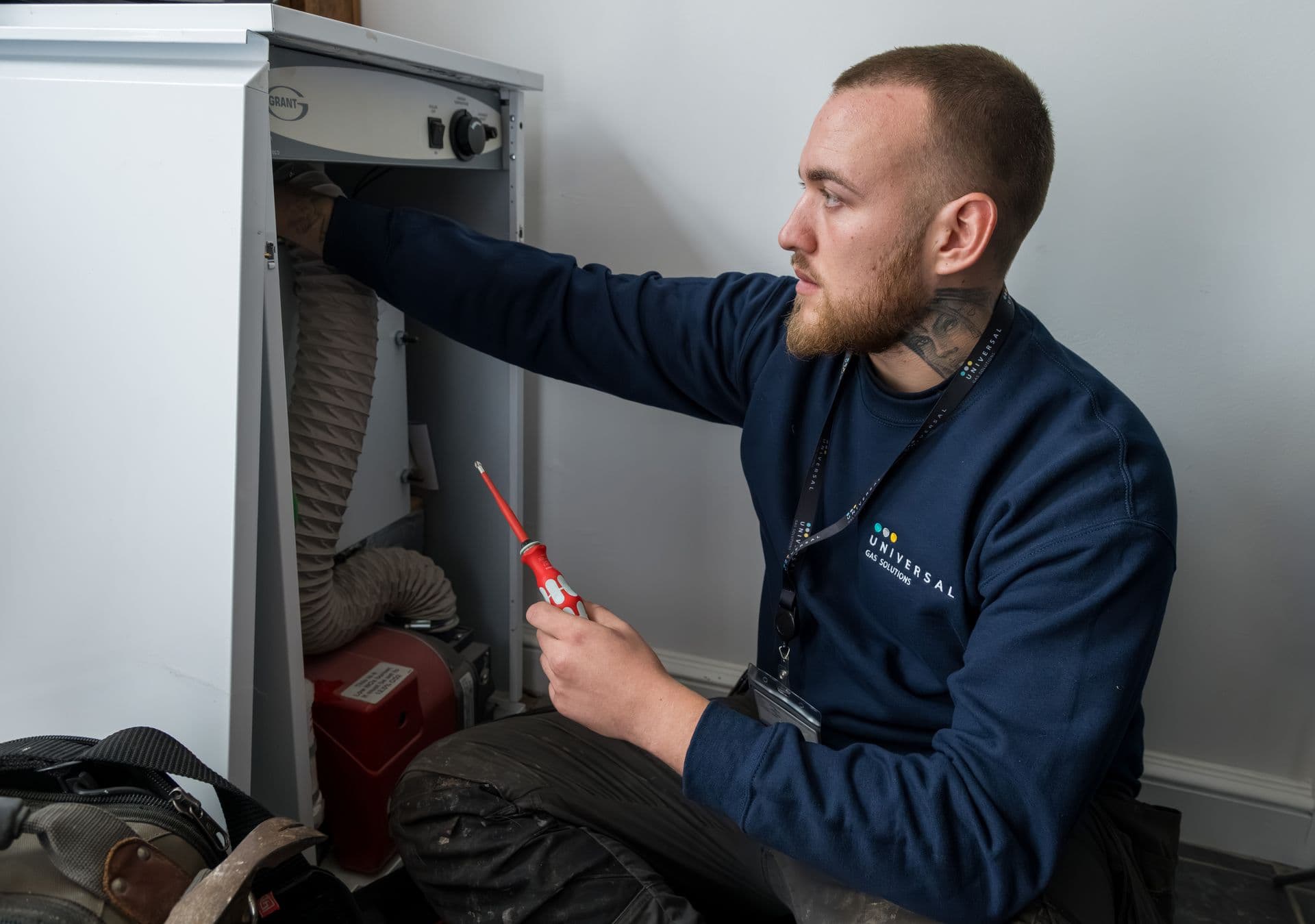
At Universal Gas, we've spent years helping businesses across Hertfordshire and Bedfordshire optimize their commercial heating systems. Our Gas Safe registered engineers understand commercial heating inside and out, from the regulatory requirements you must meet to the practical realities of keeping diverse commercial spaces comfortable and efficient. We provide everything from new installations and system upgrades to comprehensive maintenance contracts and guaranteed emergency response.
Ready to take control of your commercial heating? Visit our commercial services page to learn more about our comprehensive commercial heating solutions, or contact us directly at 01582 363 934 or enquiries@universalgas.co.uk to discuss your specific requirements. We offer free, no-obligation consultations where we'll assess your current system, understand your needs, and provide honest advice about the best approach for your business-whether that's optimization of your existing setup or investment in new, more efficient equipment. Don't wait for a breakdown to start thinking about your commercial heating-let's work together to create a heating strategy that keeps your business running smoothly all year round.
Need expert heating advice?
Our Gas Safe registered engineers are here to help.