The UK's heating landscape is undergoing its biggest transformation in decades. As the government pushes toward net-zero carbon emissions by 2050, homeowners face an increasingly important question: should you stick with traditional gas boiler heating, or is it time to embrace heat pump technology? With generous government grants available and energy prices fluctuating unpredictably, making the right choice for your home has never been more critical-or more complex.
At Universal Gas, we specialise in both traditional heating systems and modern air source heat pumps, giving us unique insight into what works best for different properties and lifestyles. We understand that choosing between these technologies isn't just about picking the "greenest" option-it's about finding the solution that delivers reliable comfort, fits your budget, and works with your property's specific characteristics. This comprehensive guide cuts through the marketing hype and government policy jargon to give you the practical information you need to make an informed decision.
Understanding the Technologies: How They Work
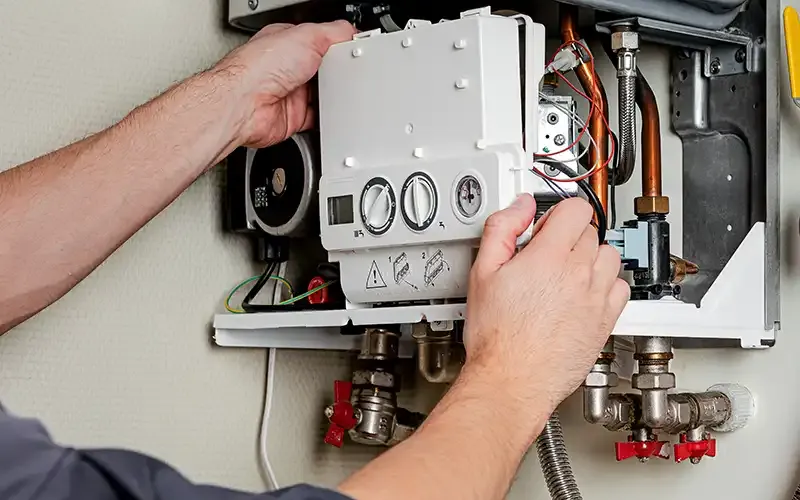
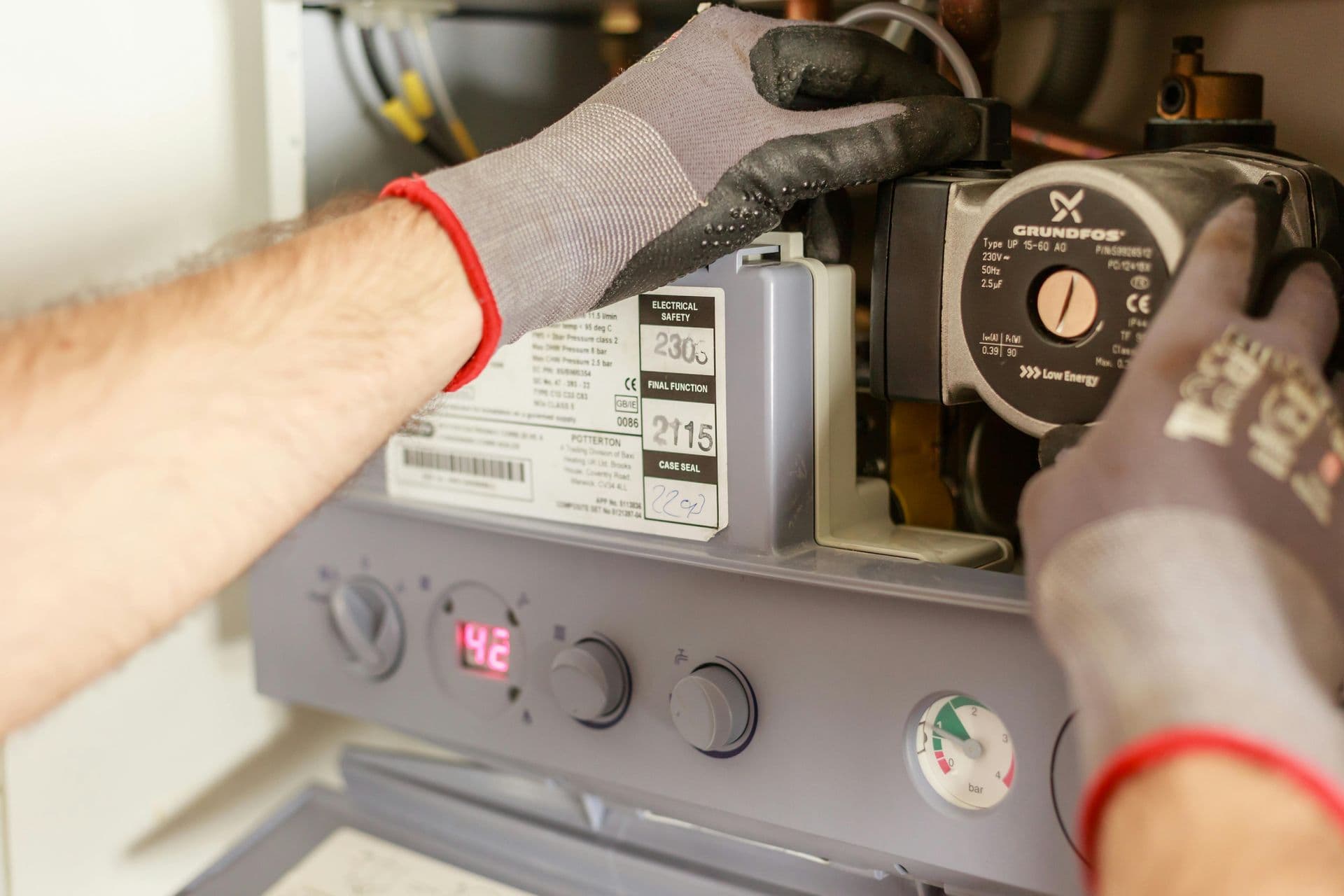
Before diving into comparisons, it's essential to understand the fundamental difference between these heating systems. Gas boilers work by burning natural gas to generate heat directly. The combustion process heats water, which is then circulated through your radiators or underfloor heating system. It's a straightforward, proven technology that's been refined over more than a century. Modern condensing gas boilers achieve efficiencies above 90%, meaning they convert most of the gas they burn into usable heat for your home.
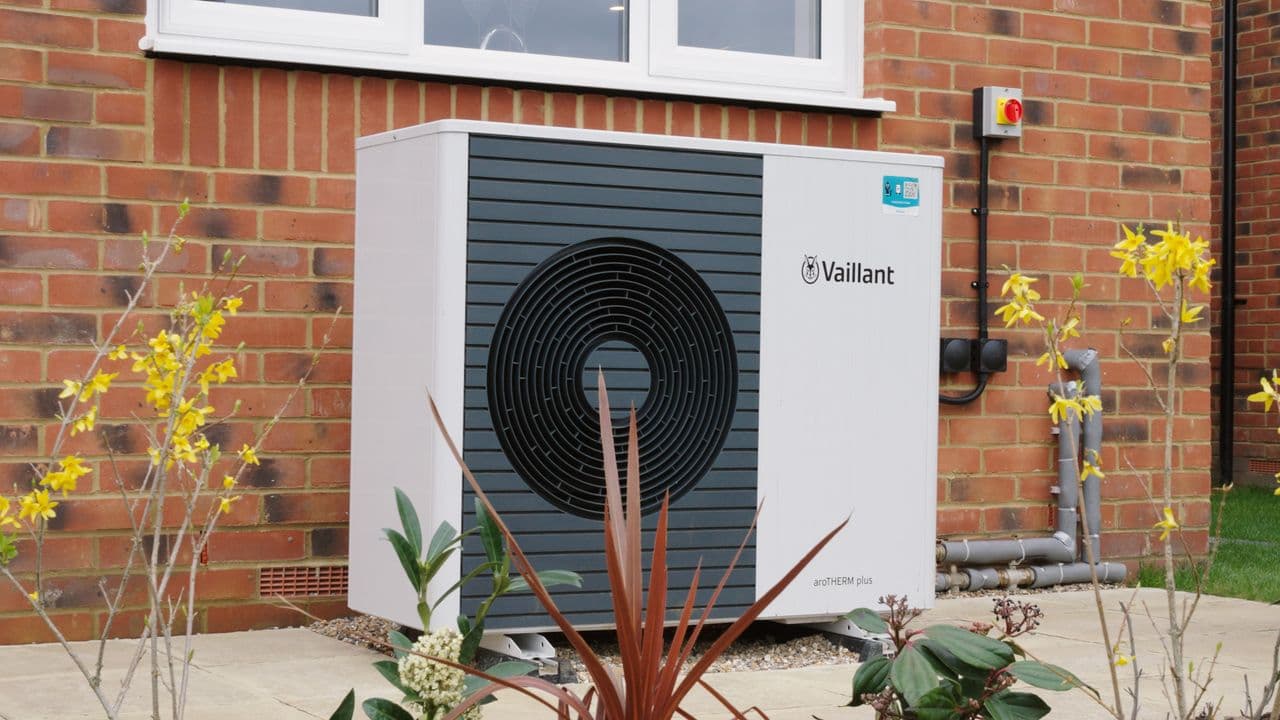
Air source heat pumps operate on an entirely different principle. Rather than generating heat through combustion, they extract thermal energy from the outside air and transfer it into your home. Think of it as a refrigerator running in reverse-where a fridge moves heat from inside to outside, a heat pump moves heat from outside to inside. Even when outdoor temperatures drop to freezing or below, there's still thermal energy in the air that can be extracted and concentrated to heat your home. The process uses electricity to power a compressor and fan, but for every unit of electricity consumed, a well-installed heat pump can deliver three to four units of heat-an efficiency level no combustion-based system can match.
This fundamental difference in operation has profound implications for running costs, installation requirements, environmental impact, and suitability for different properties. Understanding these implications is key to making the right choice for your circumstances.
Upfront Costs: The Investment Required
One of the most significant factors in any heating decision is the initial investment required. Gas boiler replacement typically costs between £2,000 and £4,000, depending on the boiler type, your property's existing heating system, and any additional work required. If you're already connected to the gas network and replacing like-for-like (for example, a combi boiler replacing another combi), the installation is relatively straightforward and can often be completed within a day or two.
Air source heat pump installations represent a substantially larger upfront investment, typically ranging from £8,000 to £14,000 before any grants. This higher cost reflects the more complex installation process, which often includes upgrading radiators, installing a hot water cylinder (if you don't already have one), adding buffer tanks, and potentially improving your home's insulation to ensure the system operates efficiently. The outdoor unit requires careful positioning and mounting, and the entire system needs precise commissioning to deliver optimal performance.
However, this cost comparison changes dramatically when you factor in government support. The Boiler Upgrade Scheme (BUS) currently offers £7,500 grants for air source heat pump installations in England and Wales. This substantial incentive brings the actual out-of-pocket cost down to a much more comparable level with gas boiler replacement-potentially £500 to £6,500 depending on your specific installation requirements. The grant is designed to make low-carbon heating accessible to more homeowners and bridge the cost gap between traditional and renewable heating technologies.
To qualify for the BUS grant, your property must have an Energy Performance Certificate (EPC) and meet certain insulation standards. The installer must be MCS certified, and the heat pump must meet specific efficiency requirements. At Universal Gas, we handle the entire grant application process, ensuring you receive the maximum support available and that your installation meets all necessary standards. It's worth noting that grant availability and amounts can change, so it's important to check current eligibility when planning your installation.
Running Costs: The Long-Term Financial Picture
While upfront costs matter, the long-term running costs determine the true financial impact of your heating choice. This is where the comparison becomes more complex and depends heavily on energy prices, your property's efficiency, and how you use your heating system.
Gas boilers benefit from natural gas being relatively affordable compared to electricity. As of late 2024, natural gas costs approximately 7-10p per kWh, while electricity costs around 24-28p per kWh. At first glance, this price difference seems insurmountable for heat pumps. However, heat pumps' superior efficiency changes the equation significantly. A modern gas boiler operating at 92% efficiency requires 1.09 units of gas to deliver one unit of heat to your home. A heat pump with a Seasonal Performance Factor (SPF) of 3.5 requires only 0.29 units of electricity to deliver that same unit of heat.
Let's make this concrete with actual costs. To generate 10,000 kWh of heat (roughly what an average three-bedroom home needs annually), a gas boiler would consume approximately 10,870 kWh of gas at a cost of around £870-£1,090. A heat pump with an SPF of 3.5 would consume about 2,857 kWh of electricity at a cost of approximately £685-£800. Even with electricity's higher per-unit cost, the heat pump's efficiency advantage results in comparable or lower annual running costs.
However, these calculations depend on several critical factors. Heat pumps perform best when running at lower temperatures for longer periods, making them ideal for well-insulated properties with underfloor heating or oversized radiators. In older, poorly insulated properties with standard radiators, heat pump efficiency can drop significantly, potentially making gas boilers more economical. Your actual costs will also vary with energy price fluctuations-the relative cost-effectiveness of each technology shifts as gas and electricity prices change at different rates.
It's also worth considering future energy price trends. The UK government's stated policy direction suggests gas prices may rise relative to electricity as carbon taxes increase and renewable electricity generation expands. Additionally, if you have or plan to install solar panels, the economics shift dramatically in favour of heat pumps, as you can power your heating with free electricity during sunny periods and reduce your reliance on grid electricity during expensive peak times.
Environmental Impact and Carbon Footprint
For many homeowners, environmental considerations play a crucial role in heating decisions. The carbon impact of your heating system depends not just on the technology itself, but on how your energy is generated. Gas boilers burn fossil fuels directly in your home, producing carbon dioxide, water vapour, and small amounts of nitrogen oxides. A typical gas boiler emits approximately 215g of CO2 per kWh of heat delivered, contributing significantly to your household's overall carbon footprint.
Heat pumps' environmental credentials depend on the electricity grid's carbon intensity. The UK's electricity grid has been rapidly decarbonising, with renewable sources like wind, solar, and nuclear now generating more than half of our electricity. As of 2024, grid electricity produces approximately 180g CO2 per kWh. When you factor in a heat pump's efficiency (delivering 3-4 units of heat per unit of electricity), the carbon emissions work out to roughly 45-60g CO2 per kWh of heat delivered-less than one-third of a gas boiler's emissions.
This gap will only widen as the grid continues to decarbonise. Government projections suggest grid carbon intensity will drop to around 50g/kWh by 2030, which would reduce heat pump emissions to approximately 12-17g CO2 per kWh of heat-a tiny fraction of gas boiler emissions. If you combine a heat pump with solar panels, you can reduce emissions even further, potentially approaching carbon-neutral heating during sunny months.
However, it's important to acknowledge that heat pump manufacturing has a carbon footprint, particularly due to the refrigerants used in the system. Modern heat pumps use HFC or newer low-GWP (Global Warming Potential) refrigerants, but these still have environmental impact if they leak. Proper installation, maintenance, and end-of-life disposal are essential to minimise this impact. Over the system's 15-20 year lifespan, the operational carbon savings far outweigh the manufacturing and refrigerant impacts, but it's a consideration worth noting.
Which Properties Are Best Suited for Each Technology?
Perhaps the most critical factor in choosing between gas boilers and heat pumps is whether your property's characteristics support effective heat pump operation. Heat pumps aren't suitable for every home, and understanding these limitations can save you significant disappointment and expense.
Gas boilers work effectively in virtually any property connected to the gas network. They deliver heat at high temperatures (70-80°C), making them compatible with older heating systems, standard radiators, and properties with varying levels of insulation. They can rapidly heat a cold property and respond quickly to thermostat changes. This versatility makes gas boilers the default choice for most UK homes and explains why they've dominated domestic heating for decades.
Heat pumps, in contrast, work best in specific conditions. They deliver heat at lower temperatures (typically 35-55°C), which means they're most effective in well-insulated properties that can retain heat effectively. Properties built or renovated to modern building standards, with good loft insulation, wall insulation, and efficient windows, are ideal candidates. Underfloor heating is perfect for heat pumps because it operates at low temperatures and provides even heat distribution. If you have standard radiators, you'll likely need to upsize them-sometimes significantly-to deliver adequate heat at lower temperatures.
Space is another consideration. The outdoor unit needs to be positioned where it has good airflow, isn't too close to neighbours (noise concerns), and can be adequately protected from extreme weather. You'll also need indoor space for a hot water cylinder and possibly buffer tanks, which can be challenging in smaller properties. Gas boilers, particularly combination models, are compact and don't require separate hot water storage, making them suitable for properties with limited space.
Property age and construction type matter significantly. Victorian or Edwardian properties with solid walls, single-glazed windows, and minimal insulation are generally poor candidates for heat pumps unless you're willing to invest substantially in fabric improvements first. Modern properties built since 2000, particularly those built to higher energy efficiency standards, are excellent candidates. Properties from the 1960s-1990s fall somewhere in between and need individual assessment-some will work well with heat pumps after modest improvements, while others won't be cost-effective without major renovation.
Performance, Comfort and Practicality
Beyond costs and environmental impact, day-to-day performance and user experience significantly affect satisfaction with your heating system. Gas boilers provide rapid heat delivery and quick response to thermostat changes. If you come home to a cold house and turn the heating on, a gas boiler will warm your home relatively quickly, typically achieving comfortable temperatures within 30-60 minutes. This rapid response suits households with variable occupancy patterns or those who prefer to heat their home only when occupied.
Heat pumps work differently and require a shift in thinking about heating. They're most efficient when maintaining a steady, consistent temperature rather than heating a cold property quickly. Many heat pump users run their systems continuously or for extended periods at lower settings, maintaining a constant comfortable temperature. This approach maximises efficiency and provides even warmth throughout the home. However, it requires more planning and doesn't suit households that want heating on-demand or prefer to heat different zones at very different times.
Hot water delivery is another practical consideration. Combination gas boilers provide unlimited hot water on demand, heating water only when you need it. This suits modern lifestyles where multiple showers in quick succession are common. Heat pumps typically work with a hot water cylinder, heating a stored volume of water. While this provides perfectly adequate hot water for most households, you need to size the cylinder appropriately for your family's needs. Running out of hot water requires waiting for the cylinder to reheat, which takes longer with a heat pump than with an electric immersion heater or gas boiler.
Noise is worth considering, particularly if you have close neighbours. Gas boilers operate inside your home and are generally very quiet, though you'll hear some noise when they fire up. Air source heat pumps have an outdoor unit with a fan and compressor that produces a constant low hum during operation. Modern units are relatively quiet (45-55 decibels), similar to a refrigerator, but the outdoor positioning and continuous operation mean neighbours might notice. Proper installation positioning and acoustic considerations can minimise this impact.
Maintenance, Reliability and Longevity
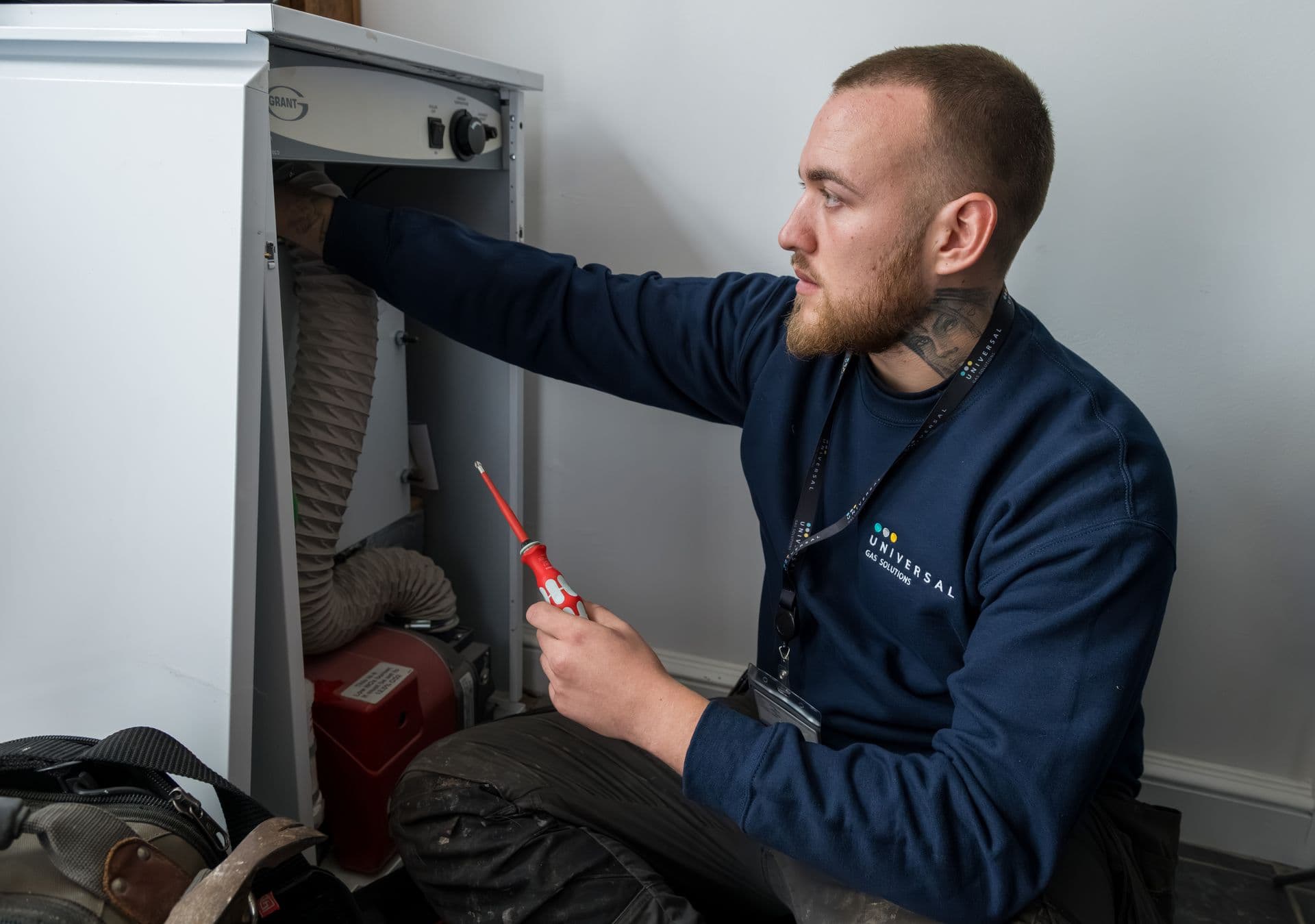
Both systems require regular maintenance to ensure efficient, safe operation and maximum lifespan. Gas boilers should be serviced annually by a Gas Safe registered engineer, typically costing £80-120. This service includes checking combustion efficiency, examining safety devices, cleaning components, and testing for gas leaks. With proper maintenance, a quality gas boiler typically lasts 10-15 years before requiring replacement. Parts are readily available, and most heating engineers can repair common faults quickly.
Heat pumps also require annual servicing, though by different specialists (MCS certified heat pump installers rather than gas engineers). Annual service costs are typically £100-200, reflecting the more specialised knowledge required. The service includes checking refrigerant levels, examining electrical connections, cleaning filters, testing the defrost cycle, and verifying system pressures. Heat pumps are generally very reliable with fewer moving parts than boilers, and they typically last 15-25 years with proper maintenance-significantly longer than gas boilers.
When failures do occur, heat pump repairs can be more expensive and may require longer wait times for specialised parts or engineers. The pool of qualified heat pump engineers is growing but remains smaller than the gas boiler engineer workforce. However, the industry is developing rapidly, and parts availability and engineer training are improving continuously. It's worth noting that many heat pump issues relate to poor initial installation rather than equipment failure-this emphasises the importance of choosing an experienced, MCS-certified installer.
Hybrid Systems: The Best of Both Worlds?
For homeowners who can't decide between gas boilers and heat pumps, or whose properties sit in the grey area between ideal candidates for either technology, hybrid systems offer an interesting middle ground. A hybrid system combines a heat pump with a gas boiler, using smart controls to select the most efficient and cost-effective heat source for current conditions.
Hybrid systems typically use the heat pump as the primary heating source during milder weather when it operates most efficiently. When outdoor temperatures drop very low (reducing heat pump efficiency) or when rapid heat is needed, the gas boiler kicks in to supplement or replace the heat pump. This approach provides the environmental benefits of heat pump operation for much of the year while maintaining the reliability and rapid heat delivery of gas for peak demand periods or cold snaps.
The financial case for hybrid systems depends on your specific circumstances. Installation costs are higher than either technology alone (typically £8,000-£12,000 after BUS grant), as you're essentially installing two heating systems. However, you may be eligible for the BUS grant (currently £7,500), and running costs are typically lower than gas-only heating due to the heat pump handling most of the heating load. The system provides insurance against future energy price volatility-if gas becomes expensive relative to electricity, you use more heat pump; if electricity becomes expensive, you use more gas.
Hybrid systems also offer a practical pathway for homes that aren't quite ready for full heat pump operation. If your insulation is adequate but not perfect, or your radiators are slightly undersized, a hybrid system can provide excellent performance without requiring major property improvements. As you improve insulation over time, the system naturally shifts toward more heat pump operation, progressively reducing carbon emissions and potentially running costs.
Future-Proofing Your Investment
When choosing heating technology, it's essential to consider not just today's circumstances but the likely changes over the next 10-20 years. Government policy is explicitly pushing toward electrification of heating and away from fossil fuels. While gas boilers will remain legal and supported for decades, several policy directions suggest the economics and practicality may shift toward heat pumps over time.
The government has signalled that new gas boiler installations will be phased out for new build properties, with a potential end date for gas boiler sales in existing properties sometime in the 2030s (though the exact date remains subject to political debate and practical considerations). Carbon pricing on fossil fuels may increase, making gas more expensive relative to electricity. Conversely, as heat pump deployment scales up, economies of scale should reduce equipment and installation costs while the growing engineer workforce will improve service availability and reduce maintenance costs.
Property value considerations may also play a role. As energy efficiency becomes increasingly important to buyers, properties with low-carbon heating may command premium values. Energy Performance Certificates already reflect heating system efficiency, and future regulations may further emphasise carbon emissions. Installing a heat pump today could make your property more attractive to buyers when you eventually sell, though quantifying this benefit is difficult given the technology's relative novelty in the UK market.
There's also the question of the gas network's long-term future. While the government has committed to maintaining the gas network for heating for the foreseeable future, there are discussions about eventually repurposing it for hydrogen or reducing coverage in some areas. If you're in a property where you might live for 20+ years, considering the potential very long-term viability of gas heating is worth thinking about, even if it seems distant now.
Making Your Decision: A Practical Framework
Given the complexity of factors involved, how should you actually make this decision for your home? Here's a practical framework to guide your thinking:
Start with property assessment. Is your home well-insulated with modern double-glazing? Do you have space for a hot water cylinder and outdoor unit? Are your radiators adequately sized or easily upgradeable? If the answers are yes, a heat pump becomes viable. If you answer no to several questions, a gas boiler might be more practical, or you might consider a hybrid system as a middle ground.
Consider your financial situation and priorities. Can you afford the upfront investment in a heat pump even with the BUS grant? Are you planning to stay in the property long enough to benefit from lower running costs? If cash flow is tight and you need the lowest upfront cost, a gas boiler makes sense. If you can manage the investment and value long-term savings and environmental benefits, a heat pump deserves serious consideration.
Think about your lifestyle and heating preferences. Do you prefer maintaining consistent temperatures or heating on-demand? Do you have predictable occupancy patterns or highly variable schedules? Heat pumps suit consistent use patterns, while gas boilers offer more flexibility for variable usage.
Factor in environmental priorities. If reducing your carbon footprint is important to you, heat pumps offer significant advantages. If you're planning solar panels or other renewable energy investments, combining them with a heat pump creates excellent synergies. If environmental impact is less of a priority, this might weigh less heavily in your decision.
Assess risk tolerance and time horizon. Heat pumps are a newer technology with less certain long-term economics given potential policy and energy price changes. Gas boilers are proven technology with well-understood costs and performance. If you prefer certainty and a conservative approach, gas boilers might suit you better. If you're comfortable with some uncertainty in exchange for potential long-term benefits, heat pumps become more attractive.
Expert Installation: The Critical Success Factor
Regardless of which technology you choose, installation quality is absolutely critical to achieving good performance, efficiency, and reliability. A poorly installed heat pump will underperform dramatically, wasting energy and providing inadequate heating. Even a gas boiler, simpler though it is, requires proper installation to ensure safety and efficiency.
For heat pumps, choosing an MCS-certified installer isn't just a grant requirement-it's essential for good outcomes. The installer should conduct a thorough heat loss calculation for your property, design a system specifically for your needs, size components appropriately, and commission the system carefully. They should explain how to operate the system efficiently and provide realistic expectations for performance and running costs. Beware of installers who provide quotes without visiting your property or who promise unrealistic performance figures.
At Universal Gas, our team has extensive experience with both traditional boiler installations and modern heat pump systems. We provide honest assessments of which technology suits your property and circumstances, handle all aspects of installation from design through commissioning, manage grant applications to ensure you receive maximum support, and provide ongoing maintenance to keep your system running efficiently for years to come.
The Verdict: Which Should You Choose?
So, heat pump or gas boiler-which is right for your home? The honest answer is: it depends entirely on your specific circumstances. Heat pumps offer impressive environmental credentials, potentially lower running costs, and excellent longevity. They're ideal for well-insulated modern properties, environmentally conscious homeowners who plan to stay long-term, and those willing to adapt their heating usage patterns for maximum efficiency.
Gas boilers provide proven reliability, lower upfront costs, rapid heat delivery, and flexibility. They're the practical choice for older properties without expensive renovation, households with tight budgets or uncertain long-term plans, and anyone who values simplicity and familiar technology. They'll remain a viable option for many years despite the government's long-term direction toward electrification.
Hybrid systems split the difference, offering heat pump benefits when conditions suit while maintaining gas backup for peak demands or poor weather. They're worth considering for properties in the middle ground, households wanting to transition gradually toward lower-carbon heating, and anyone wanting insurance against energy price volatility.
The most important step is getting professional advice tailored to your property. Generic online calculators and comparisons can't account for your home's specific characteristics, your family's lifestyle, or your financial situation. A proper assessment considers all these factors and provides recommendations you can trust.
If you're considering your heating options and want expert advice on whether a gas boiler, heat pump, or hybrid system is right for your home, contact Universal Gas today. Call us on 01582 363 934 or email enquiries@universalgas.co.uk to arrange a free, no-obligation assessment. Our team will evaluate your property, discuss your priorities and budget, explain your options clearly with realistic cost projections, and help you make the decision that's right for your circumstances-not just what's fashionable or politically popular.
Whether you choose the proven reliability of a modern gas boiler or embrace the environmental benefits of an air source heat pump, we'll ensure your installation is completed to the highest standards, delivers the performance you expect, and serves your home reliably for years to come. The future of home heating offers more choices than ever-let us help you navigate those choices and find the perfect solution for your home.
Need expert heating advice?
Our Gas Safe registered engineers are here to help.